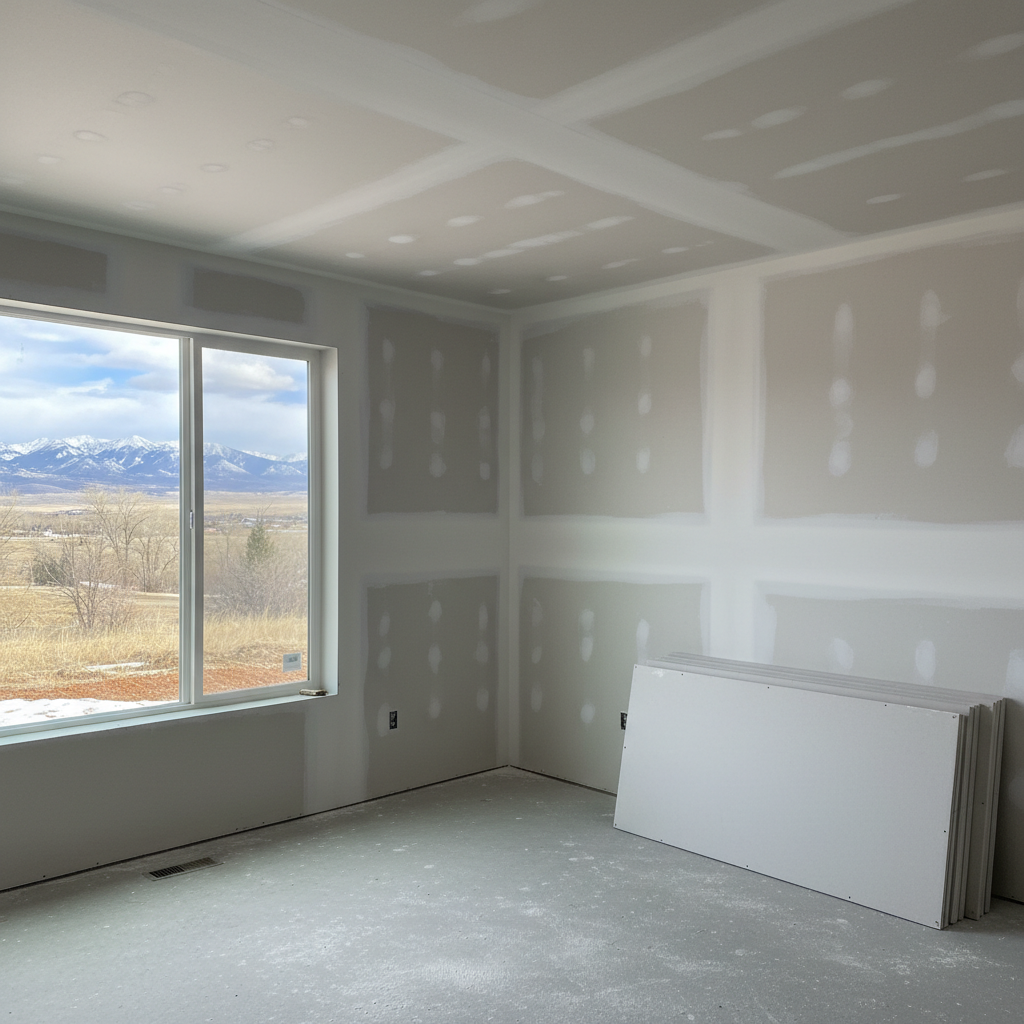
Timing Your Drywall Taping and Mudding in Millcreek
So, when's the best time to tackle that drywall taping and mudding project? It’s a question we hear a lot, and honestly, the answer isn’t as simple as picking a month. Here in Millcreek, our climate really dictates how well the mud sets and dries. You've got to think about both temperature and humidity.
Ideally, you want to be working in conditions that aren't too hot, not too cold, and definitely not too humid. That sweet spot helps the joint compound cure properly, which keeps cracks and other headaches from popping up later. For us, that usually means spring or fall are prime times. The air isn't bone-dry like it can get in the dead of winter, and it's not scorching hot and sticky like some of our summer days, especially after a good rain.
If you're building something new, you have a bit more control over the environment. But for a renovation, you're often working with whatever the existing home offers. We always suggest getting the HVAC system running, even if it's just for temperature control, before we start mudding. It makes a world of difference, believe me.
How Millcreek Weather Impacts Your Drywall Finish
Our local weather patterns are a huge factor. Just think about our dry, cold winters. When the air is super dry, joint compound can dry too fast, leading to shrinkage and cracking. It's kind of like trying to bake a cake in a desert – it just won't turn out right without some adjustments. We often have to introduce a little humidity into the air, sometimes with humidifiers, just to slow down that drying process. This is especially true in older homes in places like the Canyon Rim neighborhood, where insulation might not be as good, and indoor humidity can really drop when the furnace is blasting.
Then you've got our summers. While not as humid as, say, the East Coast, we do get those periods of higher humidity, especially during our monsoon season or after a big storm. Too much humidity, and the mud takes forever to dry. It can even lead to mildew if conditions are really bad, though that's not super common here. It also means more waiting time between coats, which can really stretch out a project. Patience is key here; rushing it will only cause problems later on.
Temperature swings are another thing to consider. We can see big differences between day and night temps, even inside a house if it's not conditioned. This can cause the drywall and mud to expand and contract, which isn't ideal during the curing process. Consistency is what we're always aiming for.
Protecting Your Drywall Investment Year-Round
Once your drywall is taped, mudded, and painted, you want it to last, right? Here’s how you can protect that investment, no matter the season:
- Keep the Indoor Climate Steady: This is probably the most important thing. Try to keep your home's temperature and humidity pretty stable year-round. Extreme ups and downs put stress on your walls. If you're going away for a long time, don't turn off your HVAC completely; just set it to a reasonable temperature to avoid extremes.
- Fix Leaks Immediately: Any water getting in, whether it's a leaky roof, a plumbing issue, or even condensation, is drywall's worst enemy. Water damage can ruin the finish, cause mold, and mess with the structural integrity of the boards. Fix it fast, no kidding.
- Good Ventilation: Especially in bathrooms and kitchens, make sure you're using exhaust fans. This helps pull moisture out of the air, keeping it from settling on your walls and potentially causing issues.
- Proper Priming and Painting: Don't cut corners on these steps. A good primer seals the mud and drywall, giving you a consistent surface for paint. Quality paint adds another layer of protection against moisture and everyday wear.
- Watch for Cracks: Small hairline cracks can show up over time, especially in older homes as they settle. If you see them, don't panic, but do address them. Often, it's just a simple re-taping and mudding job. If they're large or keep coming back, it might point to a bigger structural issue that needs a closer look.
At Guardian Drywall Solutions, we've truly seen it all when it comes to drywall in Millcreek. Getting the initial taping and mudding done right, keeping our unique climate in mind, is super important. But taking care of your walls afterward is just as crucial for their longevity. A little attention really goes a long way in keeping your walls looking great for years to come.